What is ADHD? Understanding ADHD in Children and How Special Education Schools Use Tailored Learning Plans to Help Special Children
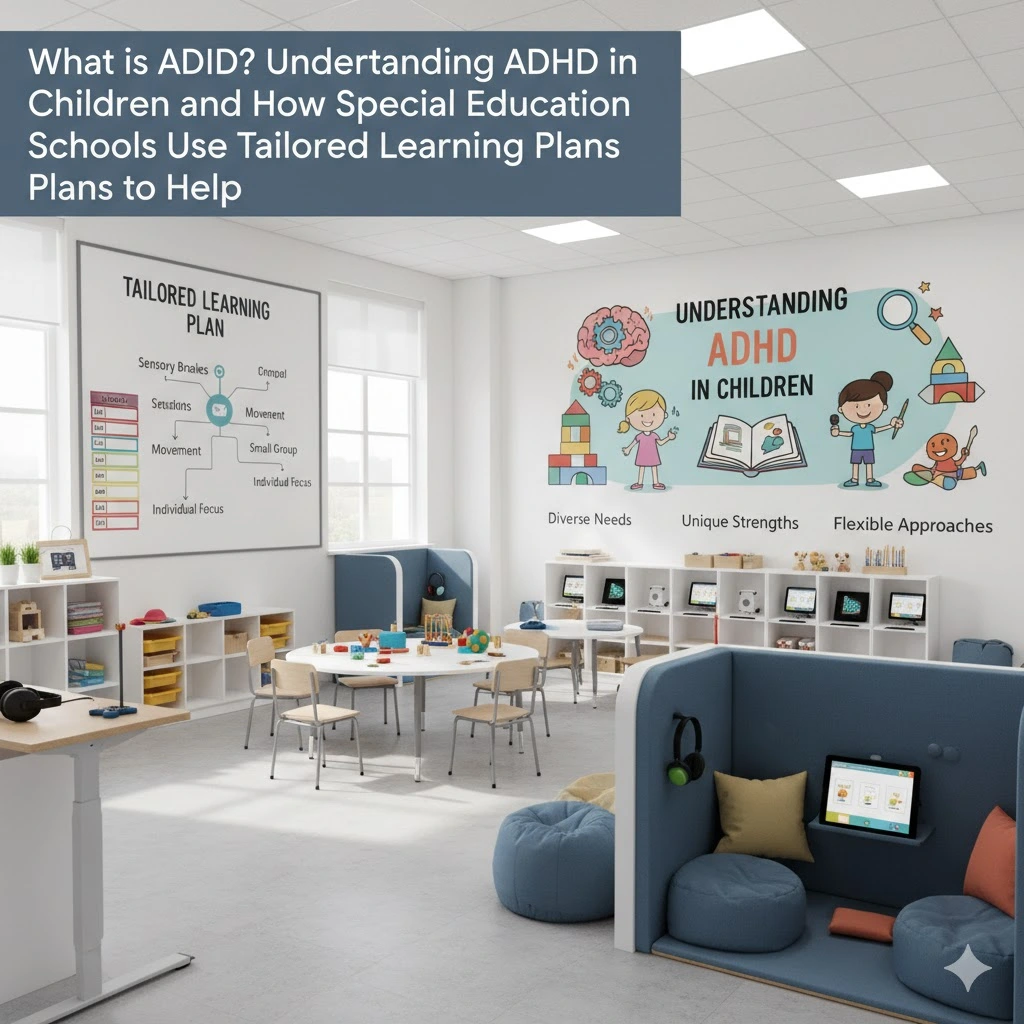
What Is ADHD? Attention Deficit Hyperactivity Disorder
Attention-Deficit/Hyperactivity Disorder (ADHD) is a neurodevelopmental condition that affects children’s ability to focus, control impulses, and manage energy levels. Children with ADHD may struggle with paying attention in class, completing tasks on time, or regulating their behavior in social settings. While ADHD is not classified strictly as a learning disability, it often overlaps with learning challenges, making academic success difficult without proper support.
ADHD generally presents in three forms: predominantly inattentive, predominantly hyperactive-impulsive, or a combined type. Each child experiences symptoms differently, which is why a one-size-fits-all approach rarely works in addressing their needs. Early identification and intervention can make a significant difference in helping children thrive both academically and socially.
Challenges Faced by Children with ADHD
Children with ADHD often face several challenges in traditional school settings, including:
- Difficulty Focusing: Maintaining attention on lessons or assignments can be exhausting and frustrating.
- Impulsivity: Acting without thinking can lead to mistakes or conflicts with peers.
- Hyperactivity: Excess energy can make it hard to sit still, follow classroom rules, or complete tasks.
- Executive Function Struggles: Planning, organizing, and completing assignments can be overwhelming.
These challenges can impact academic performance, self-esteem, and social relationships. Without proper support, children with Attention-Deficit/Hyperactivity Disorder may feel misunderstood or frustrated, which is why specialized educational interventions are crucial.
How Special Education Schools Support Children with ADHD
Special education school, like Communicare Education, provide a structured environment tailored to the needs of children with ADHD. These schools focus on individualized teaching strategies, smaller class sizes, and consistent routines to create a supportive learning atmosphere.
By understanding each child’s strengths and challenges, special education schools are able to provide accommodations and strategies that improve focus, behavior, and overall learning outcomes. Teachers are trained to use positive reinforcement, adaptive teaching methods, and behavioral interventions to help students manage ADHD-related difficulties effectively.
Tailored Learning Plans: Personalized Support for Every Child
A cornerstone of support in special education schools is the development of tailored learning plans. These plans are designed to meet the unique needs of each child and may include:
- Individualized Education Programs (IEPs): Detailed plans outlining learning goals, required accommodations, and the strategies teachers will use to support the student.
- Behavioral Strategies: Techniques to reduce impulsivity and hyperactivity while promoting focus and self-control.
- Flexible Teaching Methods: Adjustments such as breaking tasks into smaller steps, using visual aids, or incorporating movement breaks to enhance engagement.
- Parental Collaboration: Regular communication with parents ensures consistency between school and home, helping children develop routines that support learning.
Tailored learning plans help children build on their strengths while addressing areas of difficulty. They provide a roadmap for academic success and social development, ensuring children feel supported rather than singled out.
Benefits of Tailored Learning Plans for ADHD
Implementing tailored learning plans for children with ADHD offers numerous benefits:
- Improved Academic Outcomes: Personalized instruction allows children to learn at their own pace, grasping concepts more effectively and retaining knowledge longer.
- Enhanced Social Skills: Smaller class sizes and structured environments provide opportunities to practice positive interactions with peers.
- Boosted Confidence: Achieving goals in a supportive environment strengthens self-esteem and encourages motivation.
- Better Emotional Regulation: Consistent routines and behavioral strategies help children manage emotions and reduce frustration.
These benefits not only improve academic performance but also help children develop important life skills that carry into adulthood.
The Communicare Education Approach
At Communicare Education, we are dedicated to creating an environment where children with ADHD can flourish. Our team of experienced educators works closely with each student to develop learning plans that are customized to their individual needs.
We believe that every child has unique potential, and with the right support, they can overcome challenges and achieve success. Through a combination of structured learning, behavioral guidance, and emotional support, Communicare Education empowers children with ADHD to reach their full potential.
Conclusion
ADHD is a complex condition that affects children’s learning, behavior, and social interactions. However, with early intervention and the right educational support, children with ADHD can thrive academically and socially. Special education schools, like Communicare Education, use tailored learning plans to address the specific needs of each student, offering personalized strategies and accommodations that promote success.
By understanding ADHD and implementing structured, individualized support, parents and educators can help children build confidence, improve focus, and develop essential life skills. With the right guidance, every child with ADHD can achieve their goals and flourish in both school and life.