How a Specialized School for Autism Transforms Learning into Confidence and Independence
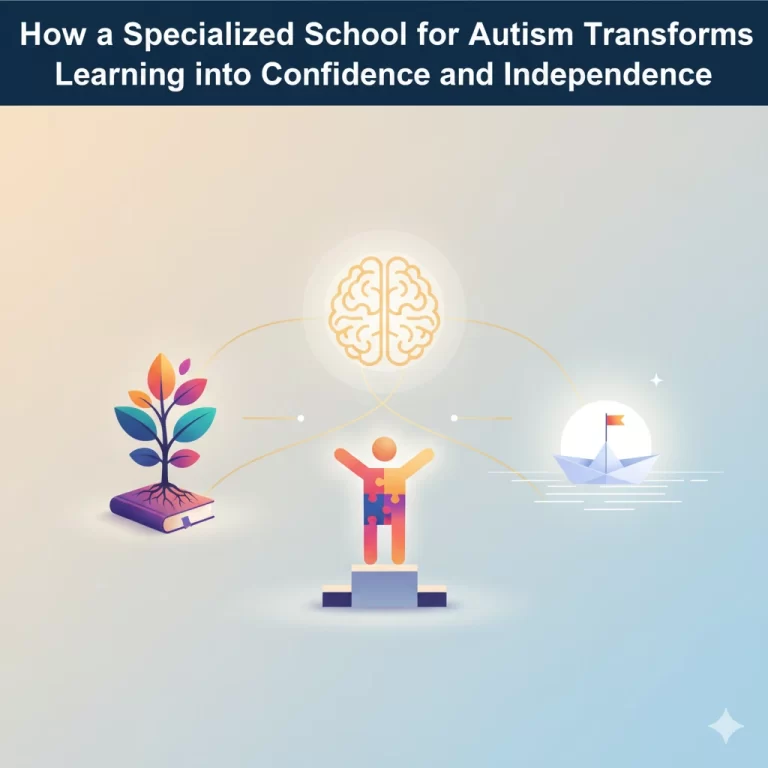
School for Autism: Transforming Learning into Confidence & Independence
In a world that often misunderstands neurodiversity, a dedicated school for autism can make all the difference. At Communicare Education, we believe that learning isn’t just about academic achievement — it’s about nurturing self-belief, autonomy, and the tools for lifelong success. A specialized environment does more than teach; it transforms. In this post, we explore how a special education setting tailored for autistic learners can convert challenges into strengths, turning uncertainty into confidence and fostering independence every step of the way.
Why a Specialized School for Autism Matters
When children with autism attend a mainstream setting without sufficient supports, their unique needs—sensory, communication, social—can remain unmet. A school for autism provides:
- Tailored learning plans that adapt to each student’s pace and style
- Therapy integration such as speech, occupational, or behavioral therapy, built right into the school day
- Trained staff with deep understanding of autism, in contrast to generalist teachers who may have limited experience
- Structured, nurturing environments with lower student-teacher ratios and predictable routines
These features let students thrive rather than just cope.
From Learning to Confidence: The Transformation
1. Mastery Over Fear through Predictable Structure
One of the core pillars in a specialized school is predictable structure. Classrooms are organized to reduce sensory overload. Transitions are smooth. Expectations are clear. Over time, students begin to trust that learning won’t surprise or overwhelm them. That trust is the seed of confidence.
2. Skill by Skill, Independence Grows
A school for autism doesn’t just teach math or reading. It teaches life skills: self-regulation, social communication, self-advocacy, and task initiation. Through scaffolded support, students gradually take more control of their daily routines, assignments, and interactions. By the time they leave, they aren’t just learners — they are independent navigators of their world.
3. Integrated Therapy Strengthens Learning
Rather than pulling children out for therapy sessions (speech, occupational, behavior), Communicare Education weaves these into the fabric of the day. A reading lesson may include speech goals; a motor activity can integrate occupational therapy. This holistic blending means lessons are meaningful, not disjointed. When therapy and academics align, progress is smoother and faster.
4. Tailored Support for Co-occurring Differences
Many autistic learners also have experiences with ADHD or sensory processing challenges. A specialized environment is flexible enough to incorporate supports like movement breaks, visual schedules, or behavioral strategies customized to each child. This flexibility addresses not just autism in isolation, but the whole child.
5. Social Growth in a Safe Setting
Social interaction can be a major hurdle. In a general classroom, peers and expectations may not align with the needs of autistic children. In a specialized school, social learning is scaffolded. Guided peer groups, social skills sessions, and structured play allow students to practice safe, supportive social growth — and gradually transfer those skills beyond the school gates.
What Makes Communicare Education Unique
At Communicare Education, our mission is clear: to transform special education into a path toward confidence, not limitation. What sets us apart:
- Holistic, child-centered planning: Each learner’s Individual Education Plan (IEP) is co-designed with parents, therapists, and educators.
- Seamless therapy integration: We don’t silo therapeutic goals; we embed them in academic and life skills.
- A nurturing culture: Emotional safety, respect, and dignity are foundational. We celebrate progress, however small.
- Progressive independence paths: Our curriculum gradually transfers responsibility to the student, fostering self-reliance.
- Support for neurodiversity: Our staff regularly upskills in methods for autism, ADHD, and related neurodifferences.
We’re not just a school. We’re a community where learners with autism are recognized, empowered, and launched into a future of autonomy.
Practical Examples: How the Transformation Happens
- Morning routines: A student might begin the day with a visual checklist. Teachers coach them to follow it independently. Over months, prompts fade, and the student manages arrival on their own.
- Reading with purpose: While decoding text, a speech therapist may cue for expressive language goals. As reading improves, so does spontaneous communication.
- Project-based learning with role shifts: Early on, teacher and student share roles in task planning. Later, students lead the planning themselves, while teacher observes, intervenes only when needed.
- Social lunch groups: Under supervision, small peer groups practice conversation, turn-taking, and self-initiation. Confidence grows until they can sit with broader peer groups with less support.
Each example is a small step; repeated, these steps build momentum.
Measurable Outcomes: From Confidence to Independence
At a dedicated school for autism, growth is visible—in behavior, communication, academics, and self-concept. Students who once resisted reading now volunteer to present. Those who depended on prompts now complete tasks autonomously. Parents report greater trust, fewer meltdowns, and deeper self-esteem.
Moreover, graduates often transition more successfully to inclusive or post-school settings because they carry skills, confidence, and self-insight—not dependency.
Embracing the Journey, Not Chasing the Label
A school for autism isn’t about “fixing” a child. It’s about inviting growth. It’s about showing that learners with autism can become confident, independent, thriving individuals. Communicare Education is proud to walk alongside families on that path — with respect, innovation, and heart.
If you’re exploring educational options for a child with autism (or ADHD), or you’re curious how integrated therapy within special education can change outcomes, we invite you to talk to us. Let us show you how learning becomes confidence, and confidence blossoms into independence.